Taipei Intelligence Hill
The new national central library park (🎖️Finalists, Conceptual Design Competition for Heart of the Capital: A Vision for Transforming Chiang Kai-Shek Memorial Hall)
International Competition
Year: 2023 (Year 5)
Team: Hsieh Meng-Ju, Song Pei-Ling, Chen Hung-Yu
Location: Taipei, Taiwan
Instructor: Wu Kwang-Tyng
As the team leader, I primarily focused on Design & Planning, Detail Modeling, Context Research, and Final Rendering.
A Vision for Transforming
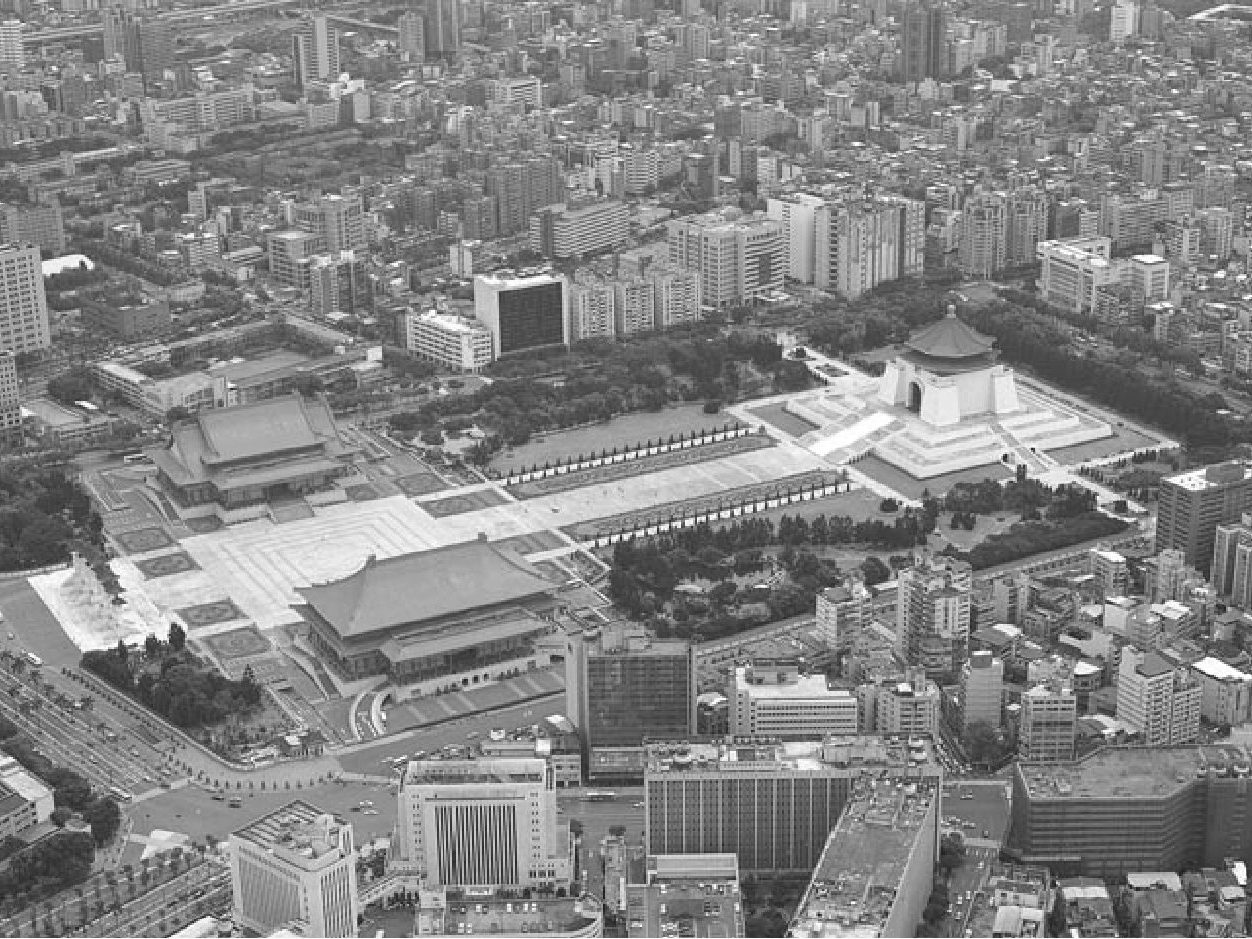
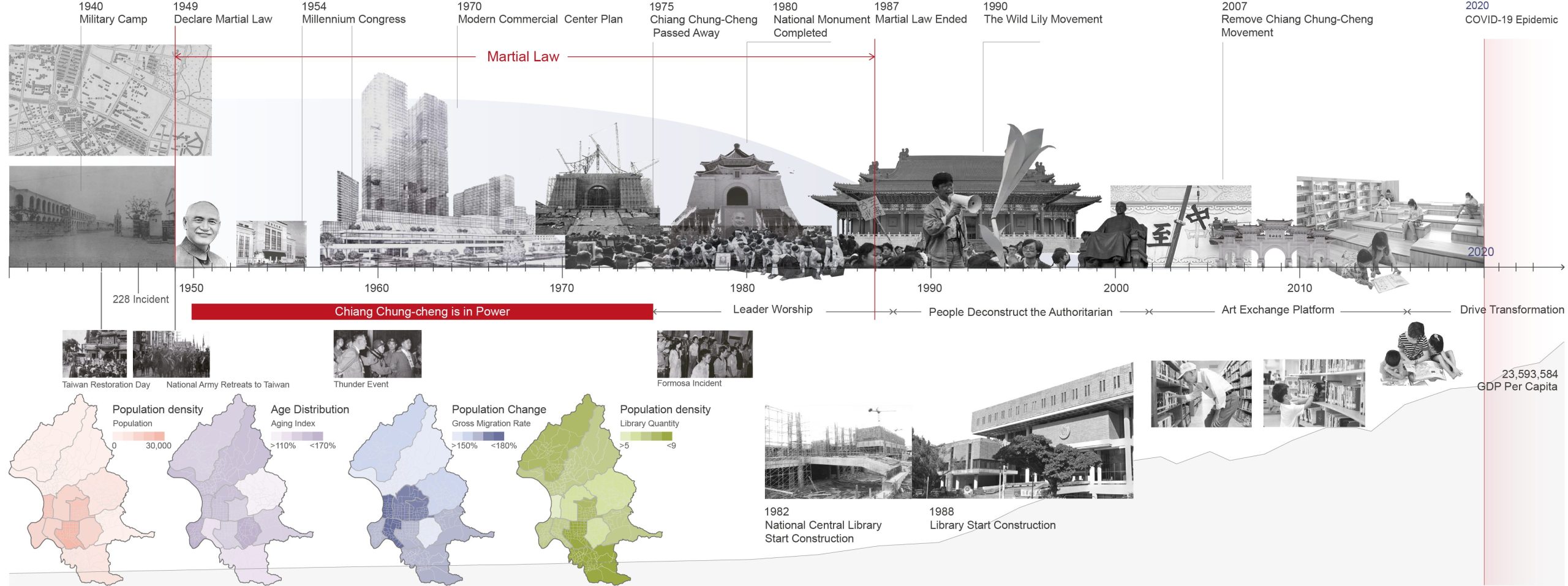
On April 4, 1980, the Chiang Kai-shek Memorial Hall, a majestic traditional Chinese architecture, was established in central Taipei to honor the late authoritarian leader, Chiang Kai-shek. Envisioned by the authorities as an enduring symbol of Chiang’s legacy, it has since become a city landmark. Yet, as public-centric ideals emerge, the space has evolved, reflecting diverse views and memories, signaling an era of transformation.
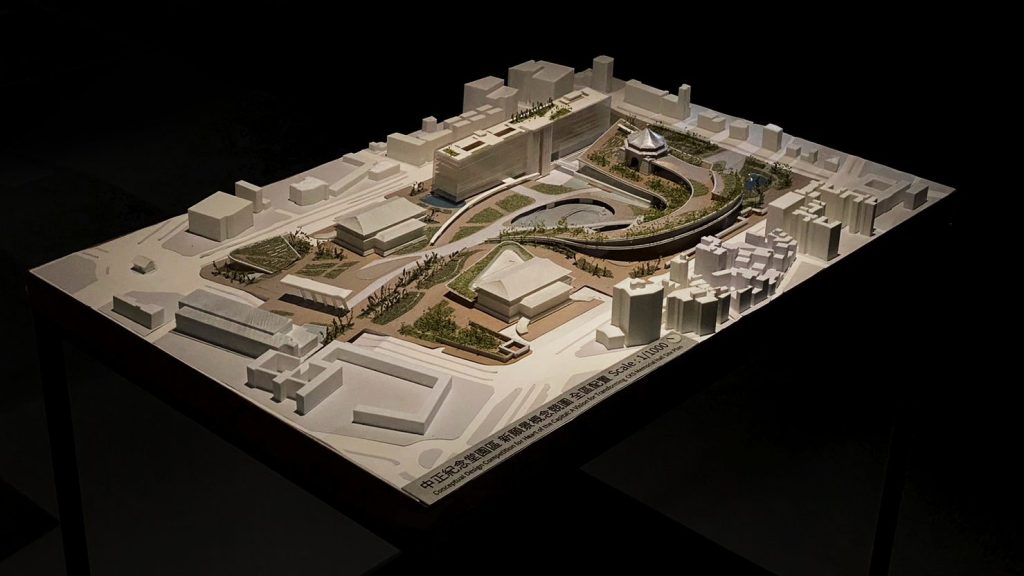
We focus on arrange the relationships between educational facilities, monuments and communities. We expect that the park can become the hub of the city in the near future, let people to gather and interact with others, to get along with nature, and to create the new image of the capital.
[History and Context]
[Reimagining the Chiang Kai-shek Memorial Hall, History and the Future]
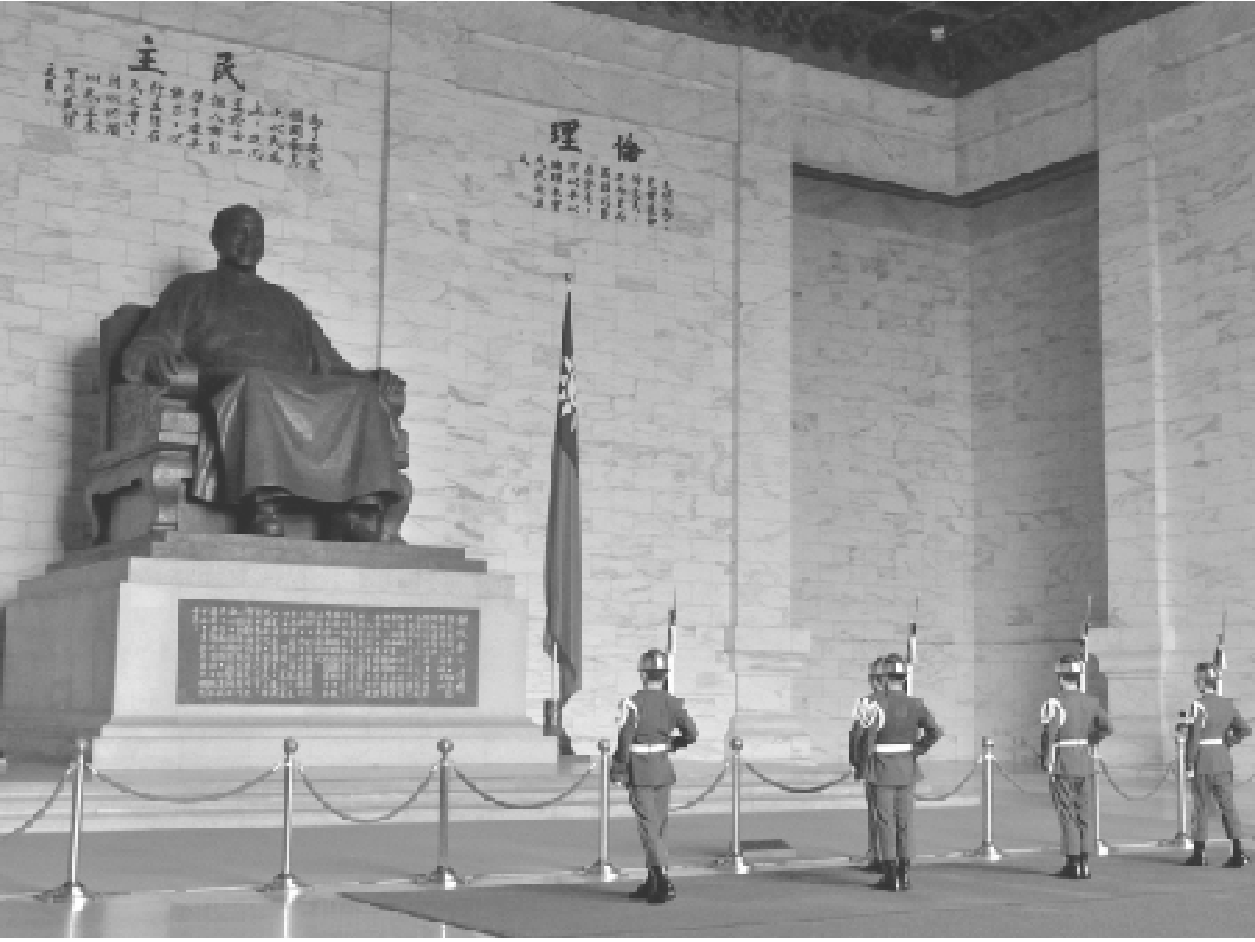
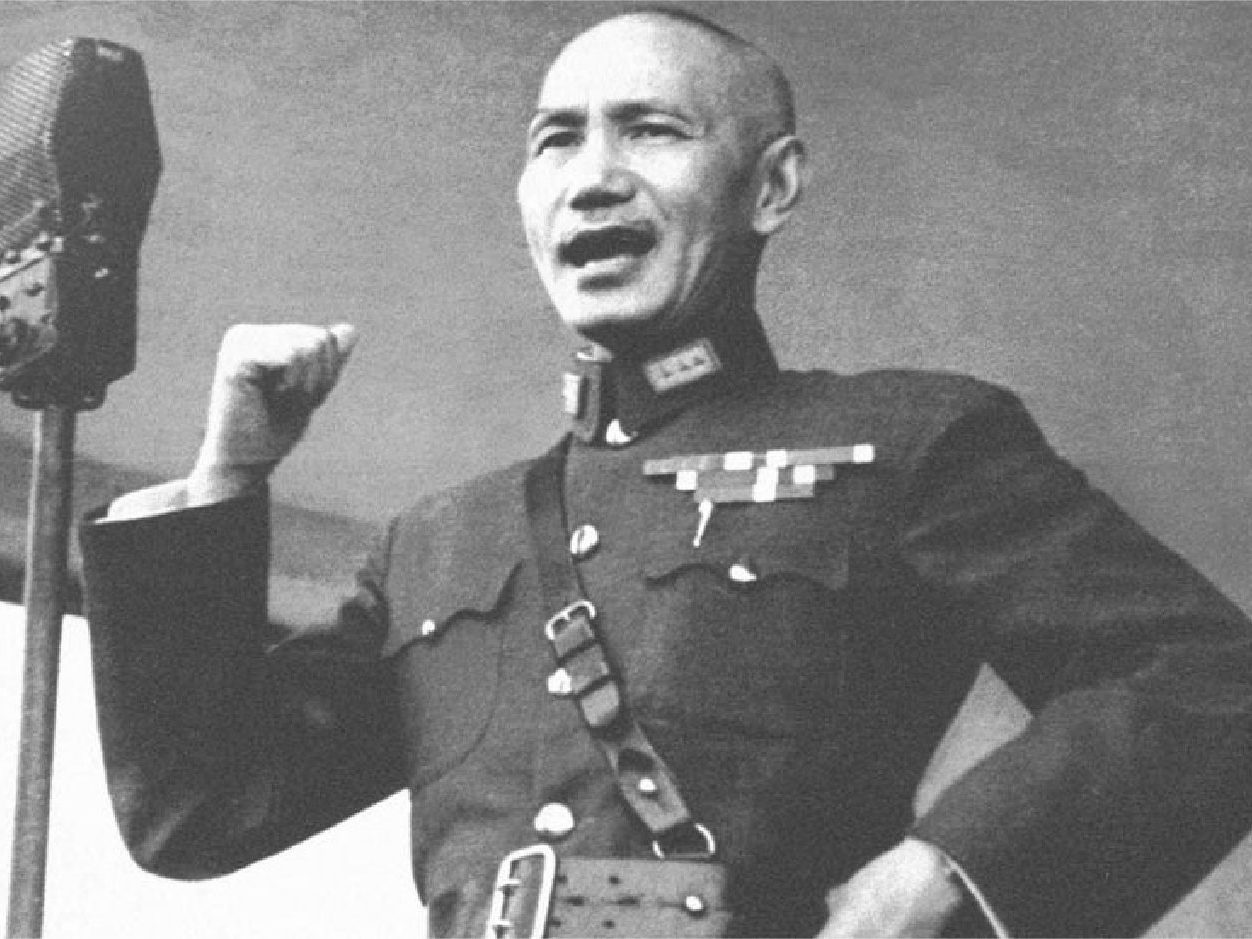
Chiang Kai-shek, a prominent dictator of the 20th century, was involved in numerous humanitarian disasters during his regime, highlighting the complex interplay between the Chiang Kai-shek Memorial Hall as a legacy of dictatorship and its modern transformation. As architects examining this history, we have the opportunity to reveal the multifaceted nature of history to the public through design. The transition of the Chiang Kai-shek Memorial Hall from a monument affirming authoritarianism to a space for diverse reflections mirrors the process of Taiwan’s society re-evaluating its past and underscores the growing emphasis on democratic values and human rights.
As the capital city, Taipei boasts the highest population density in Taiwan, accompanied by the smallest per capita living area in the nation, yet the population continues to grow. In response, through contextual mapping of Taipei City, we have decided to designate this area as a Library Memorial Park, serving as a new urban living room for the citizens of Taipei. We believe that literature, humanities, and intelligence can dissolve historical animosities, bringing a renewed image to this location.
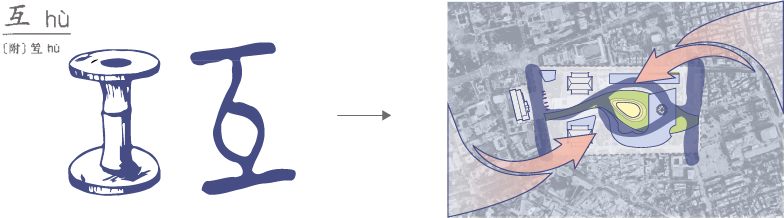

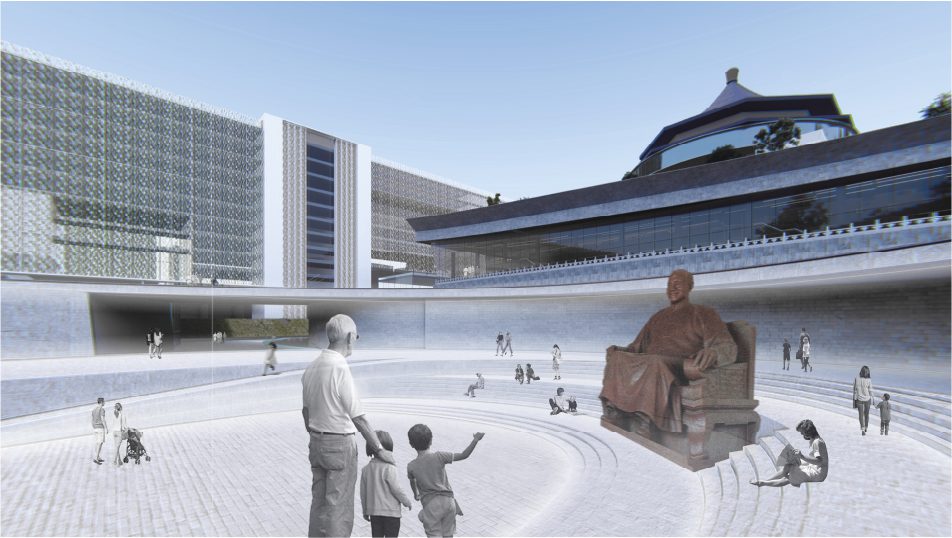
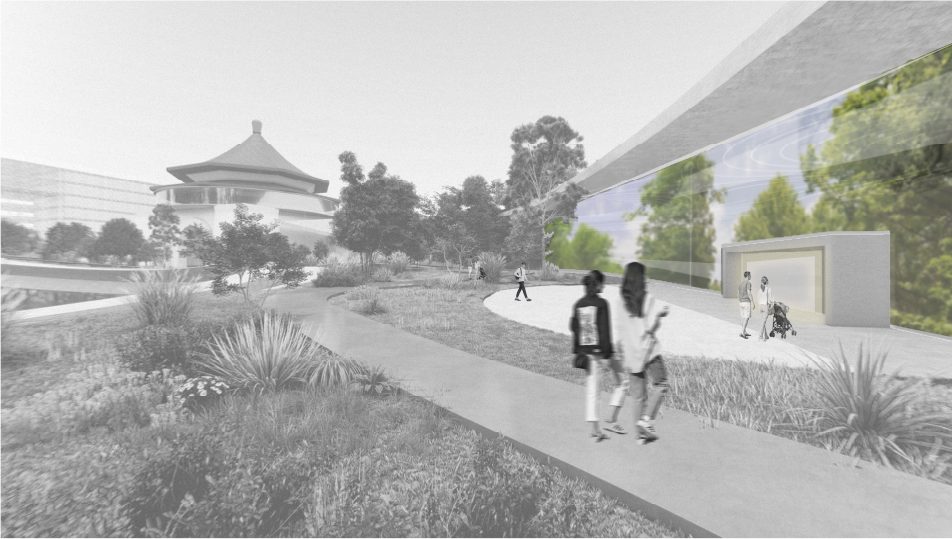
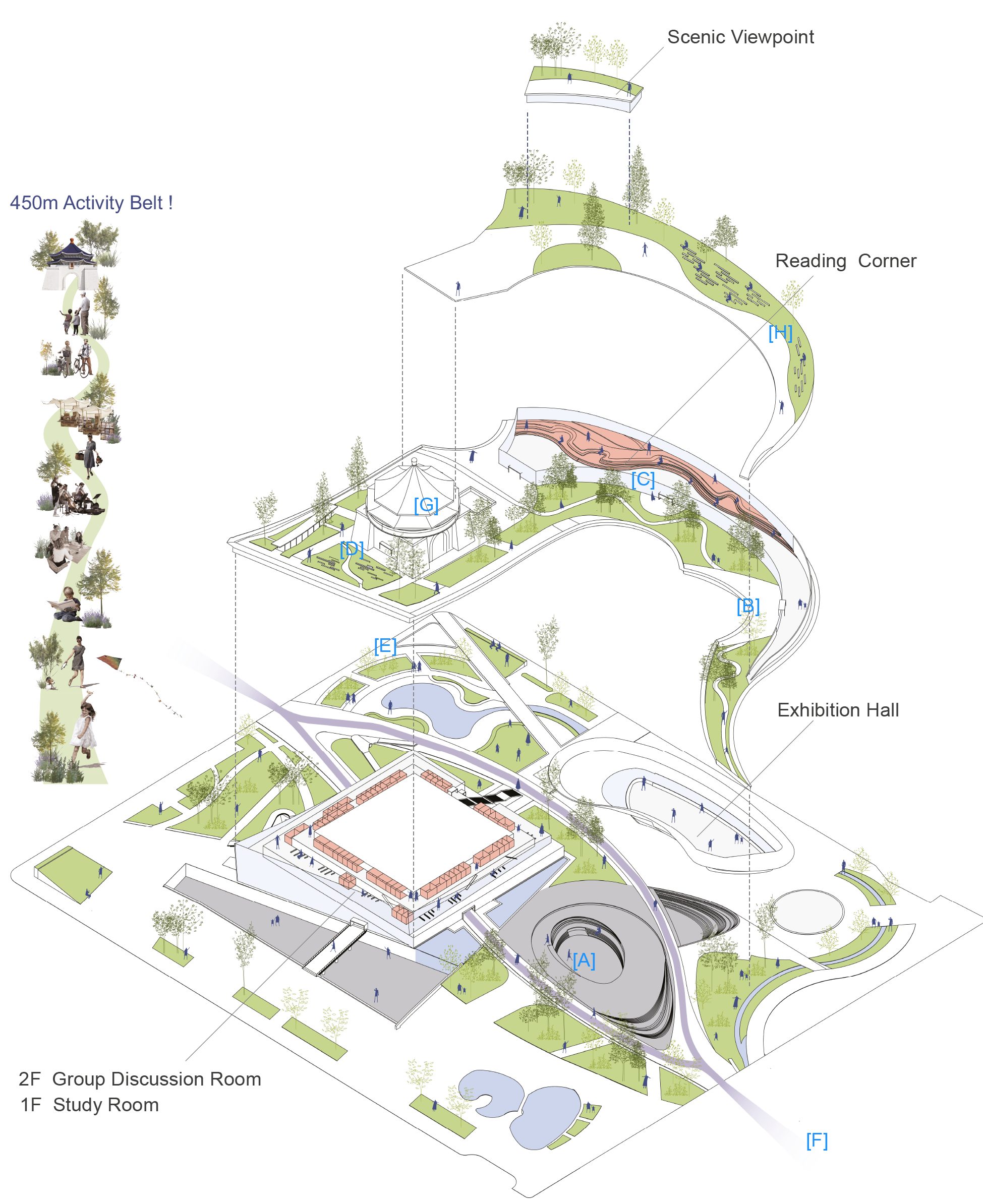
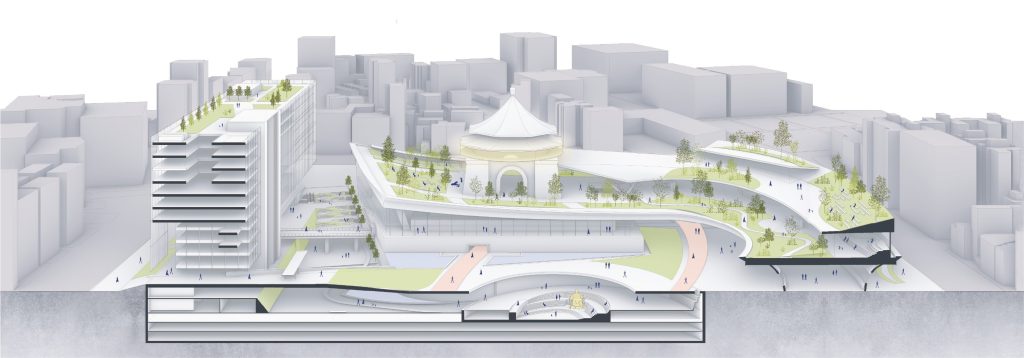
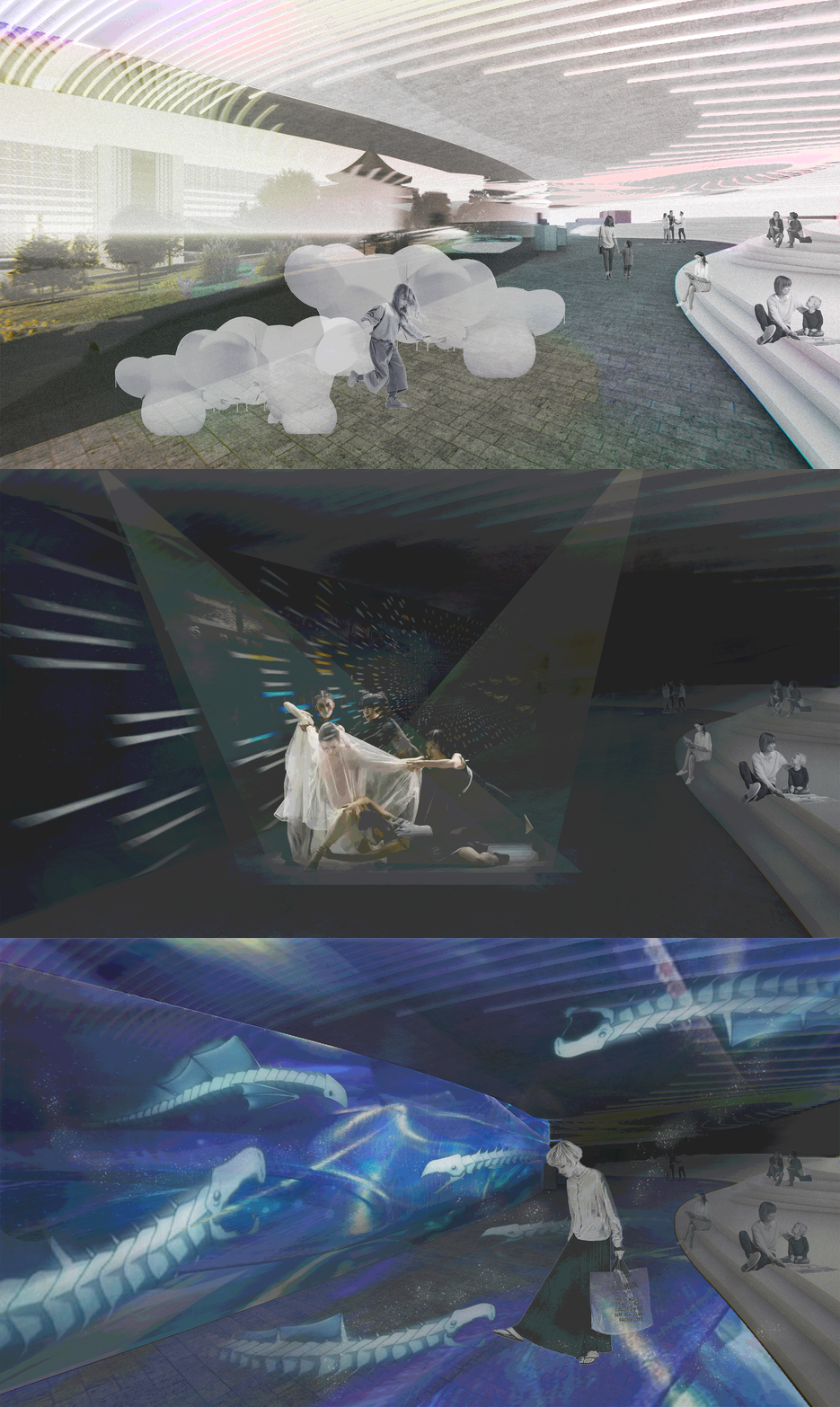
I envision a “Hill of Intelligence” for Taipei, wherein architecture takes on a landscape form to embed the main hall within nature. This concept gives rise to an expansive 450-meter activity belt that facilitates reading, performances, relaxation, and exhibitions, thereby diffusing the axis of power worship.
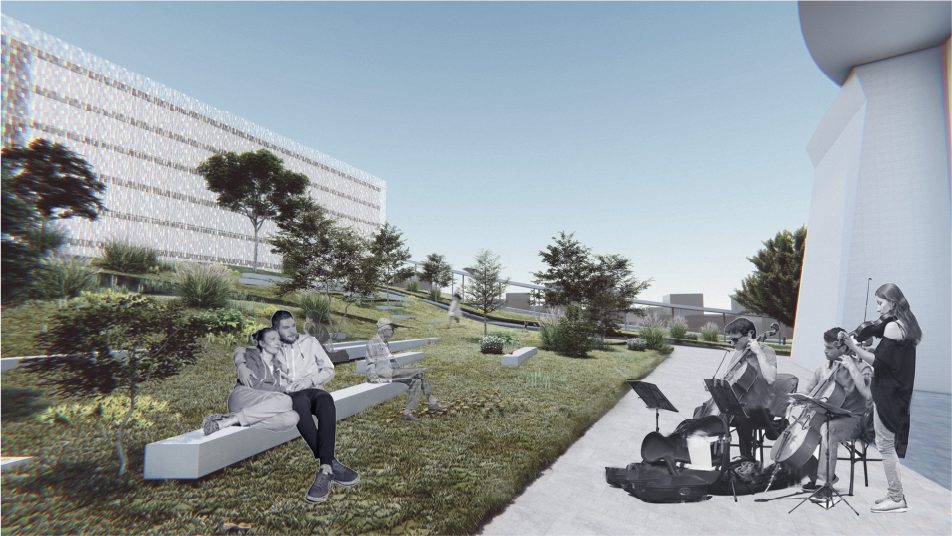
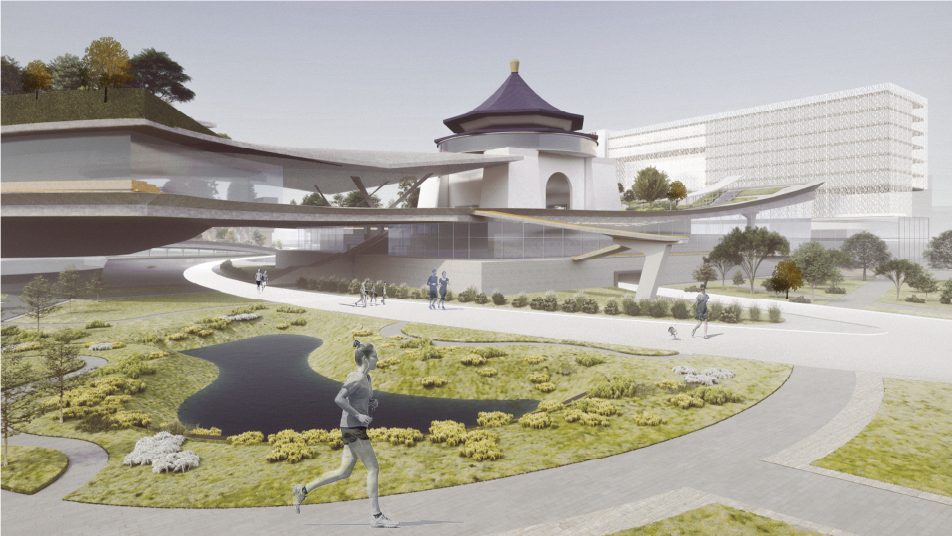
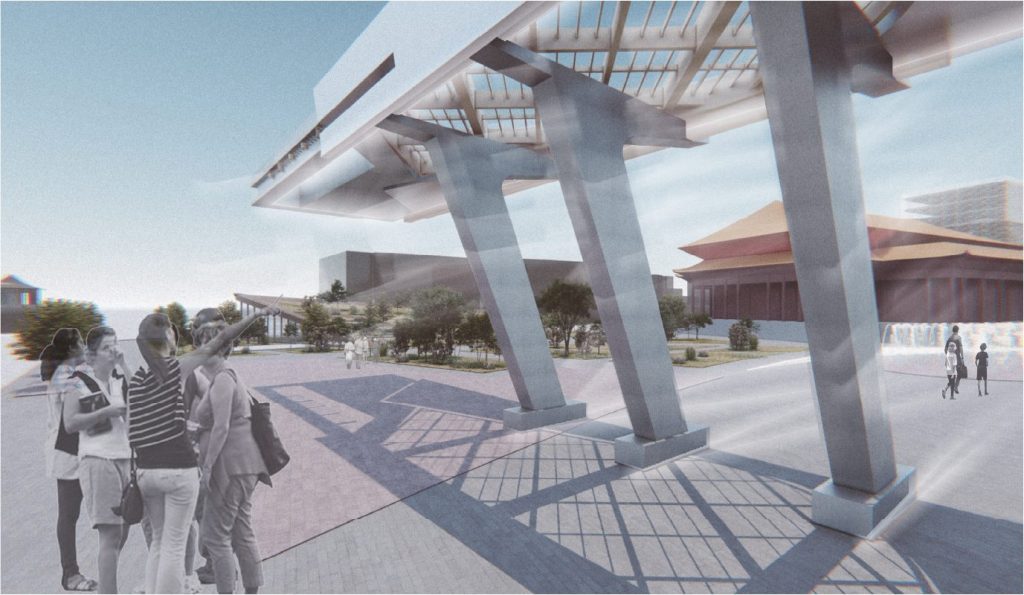
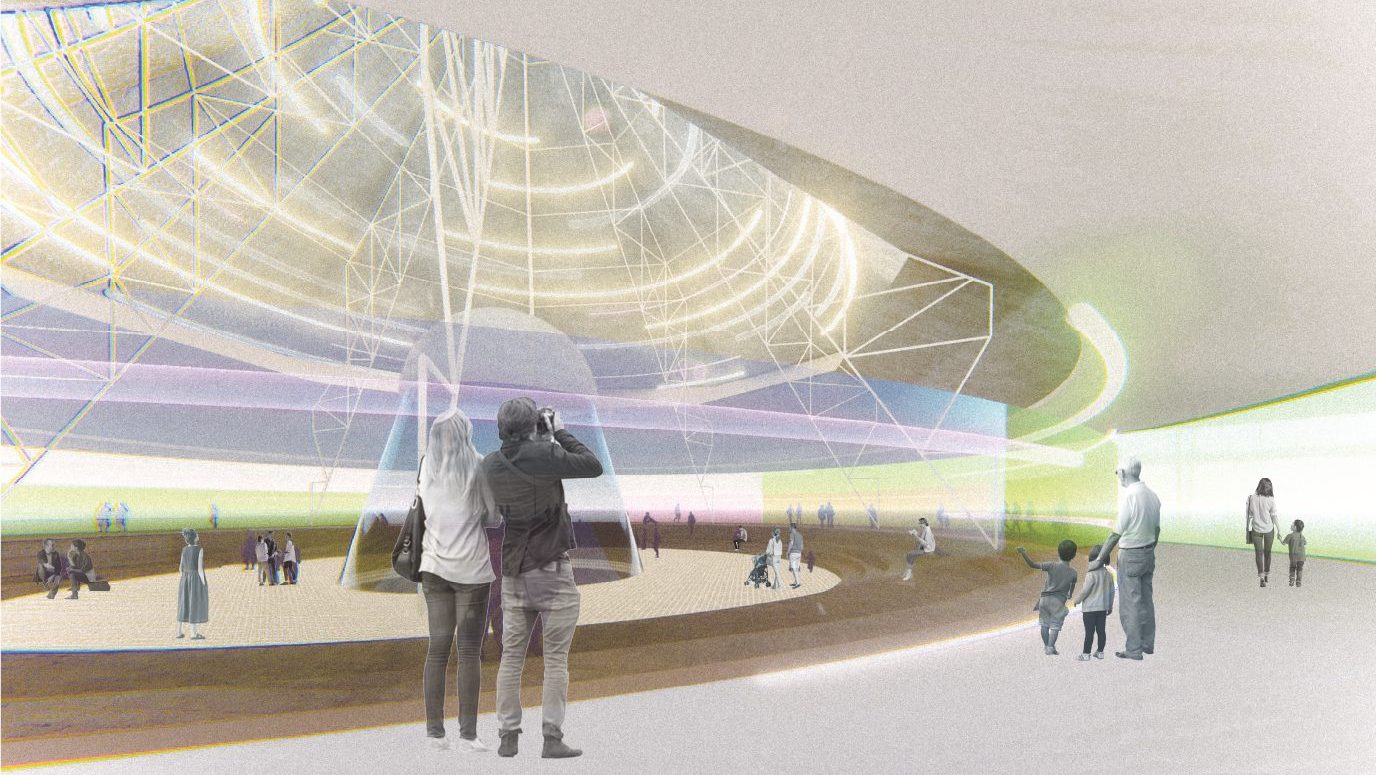
[G] Reconstructed Hall Observatory & Lounge
Open up the originally enclosed roof structure of the main hall to introduce an exhibition area for visitors, complete with a viewing platform functionality.

[H] Building Projection-Taipei Sofa Project Image
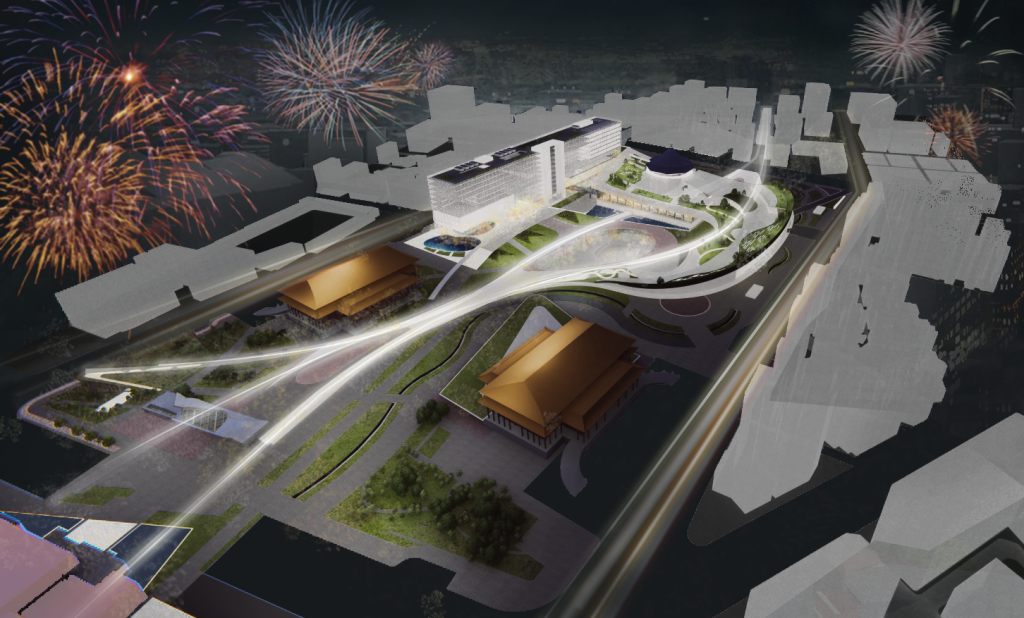
The terminus of the slope will connect to the CKS Memorial Hall, with the northern building serving as the slope’s end view. The curtain wall will reflect the natural elements and activities occurring on the slope, while also offering enhanced functionalities such as projection capabilities during events.
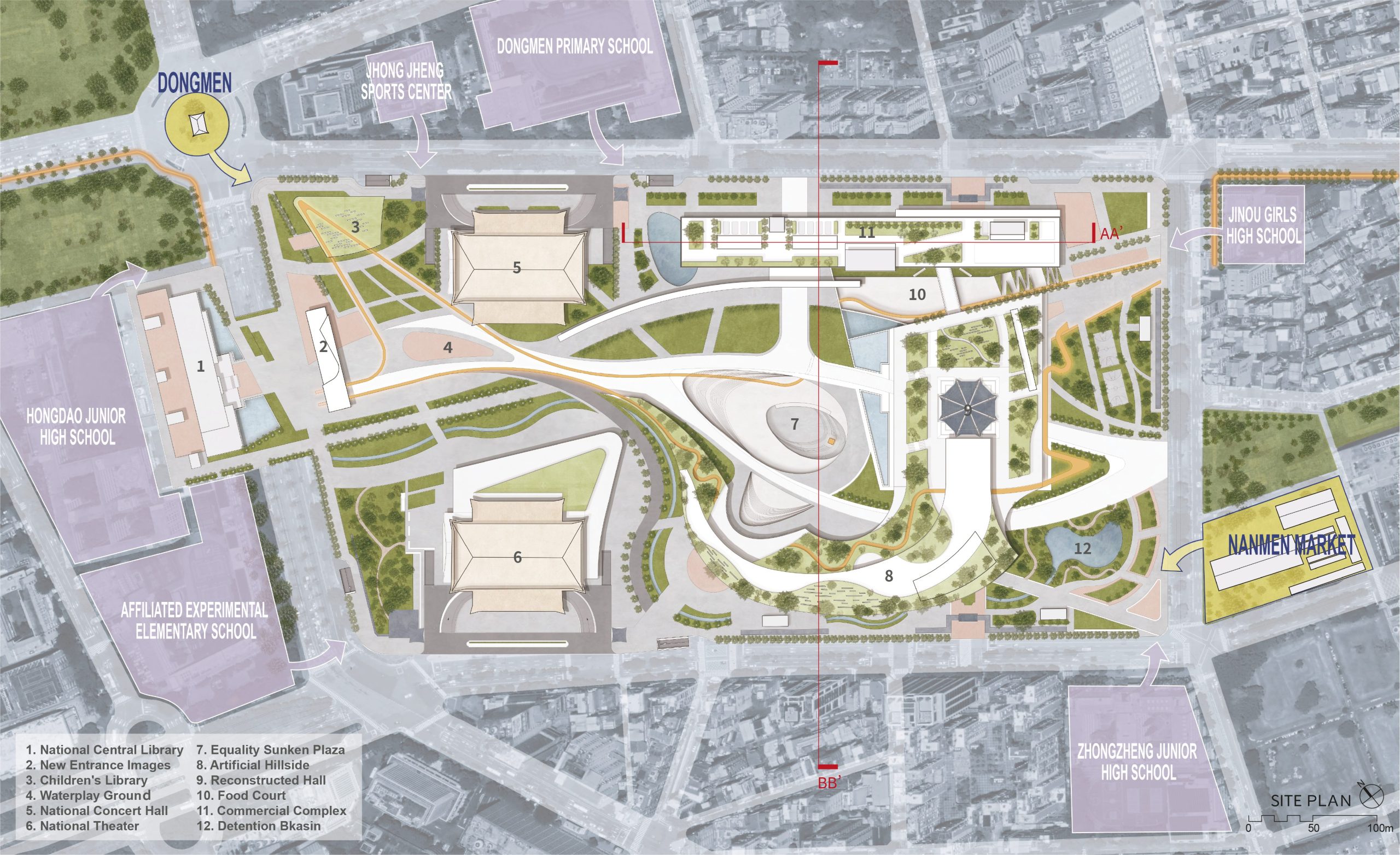
How can spatial arrangement transform the Chiang Kai-shek Memorial Hall, a symbol of power worship?
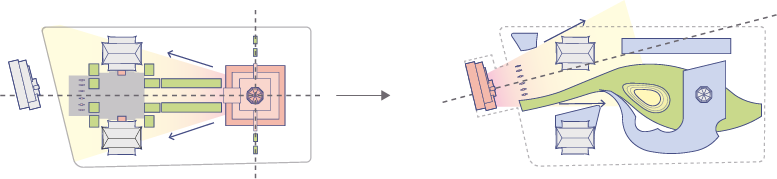
To establish a cohesive urban fabric, we began with the National Library as our anchor. Envisioning a children’s library spanning across Dongmen, we conceived a plaza directly linked to the library. This approach called for the transformation of the existing archway and a renewed facade for the twin halls. The emblematic staircase, a potent symbol of power, is proposed to be removed, retaining only one side of the Daxiao Gate as a bridge to the community. Reimagining the original ceremonial path, we introduced a sunken square that challenges the existing axis. The bronze statue is repositioned as a commemorative element, harmoniously coexisting with the public rather than towering over. This square emerges as a vibrant nucleus, radiating social, performance, and diverse activities. The intent is to craft a park interweaving democracy, nature, and the joy of reading.
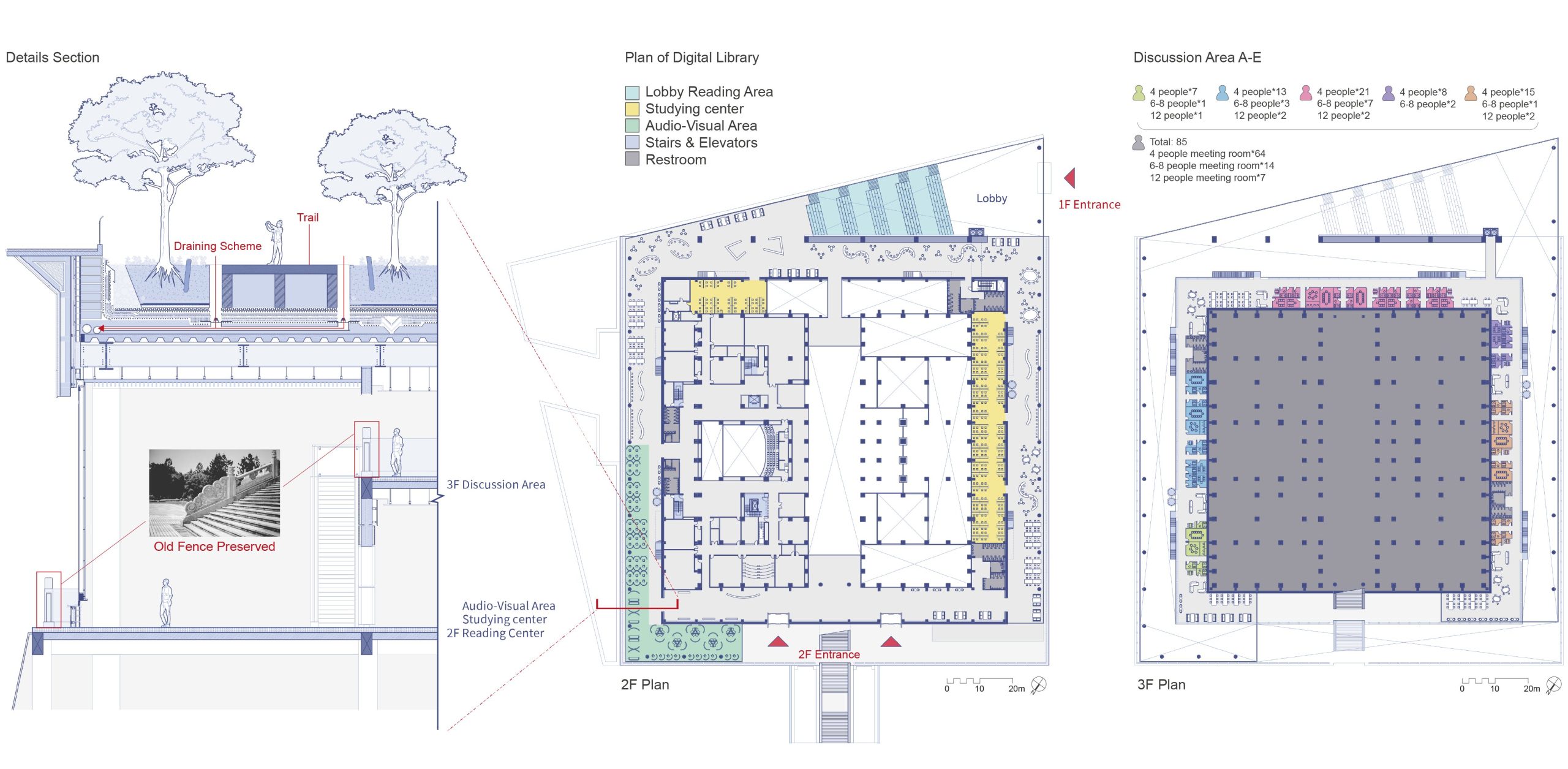
[Transformation of the pedestal symbolizing power]
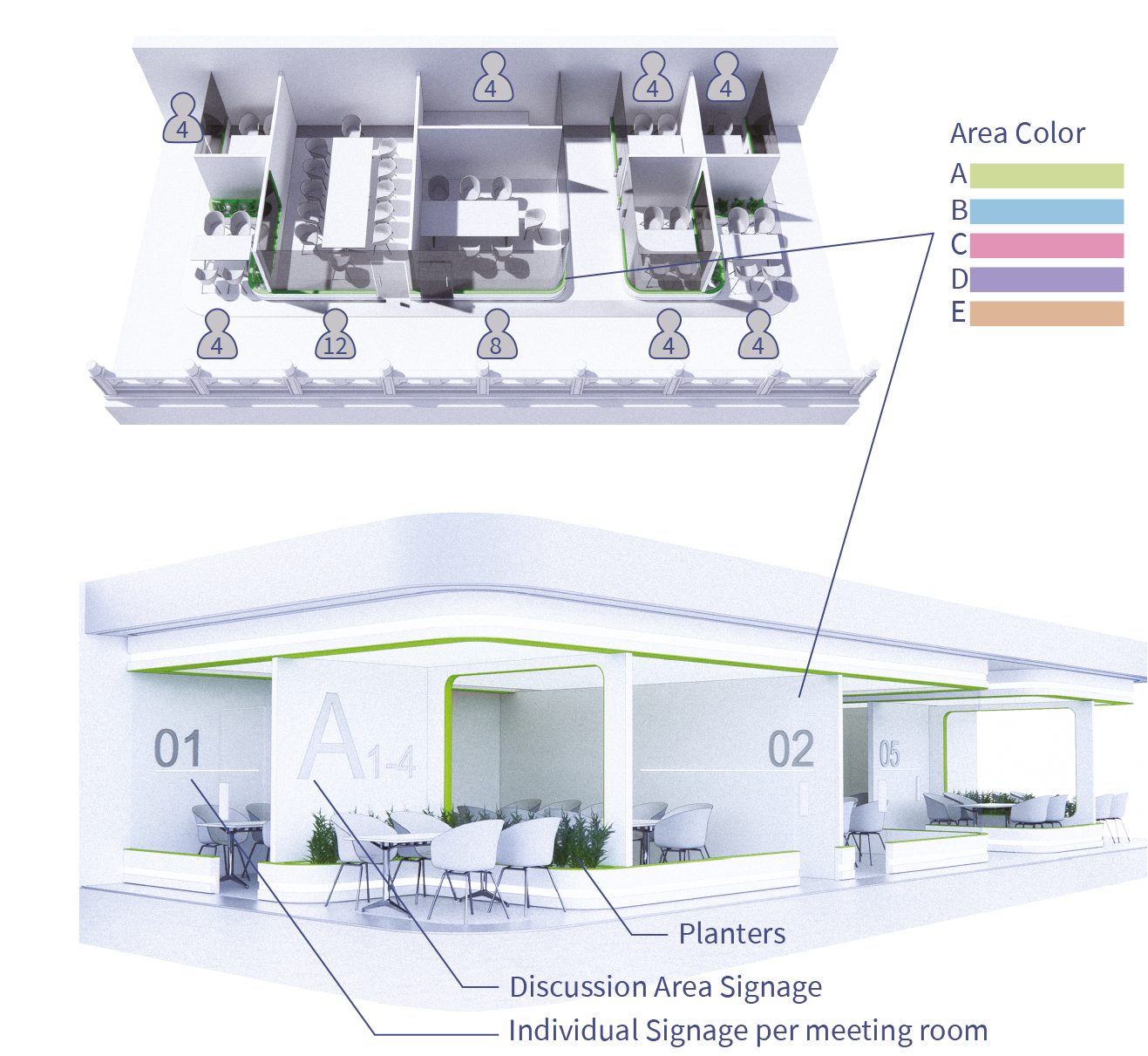
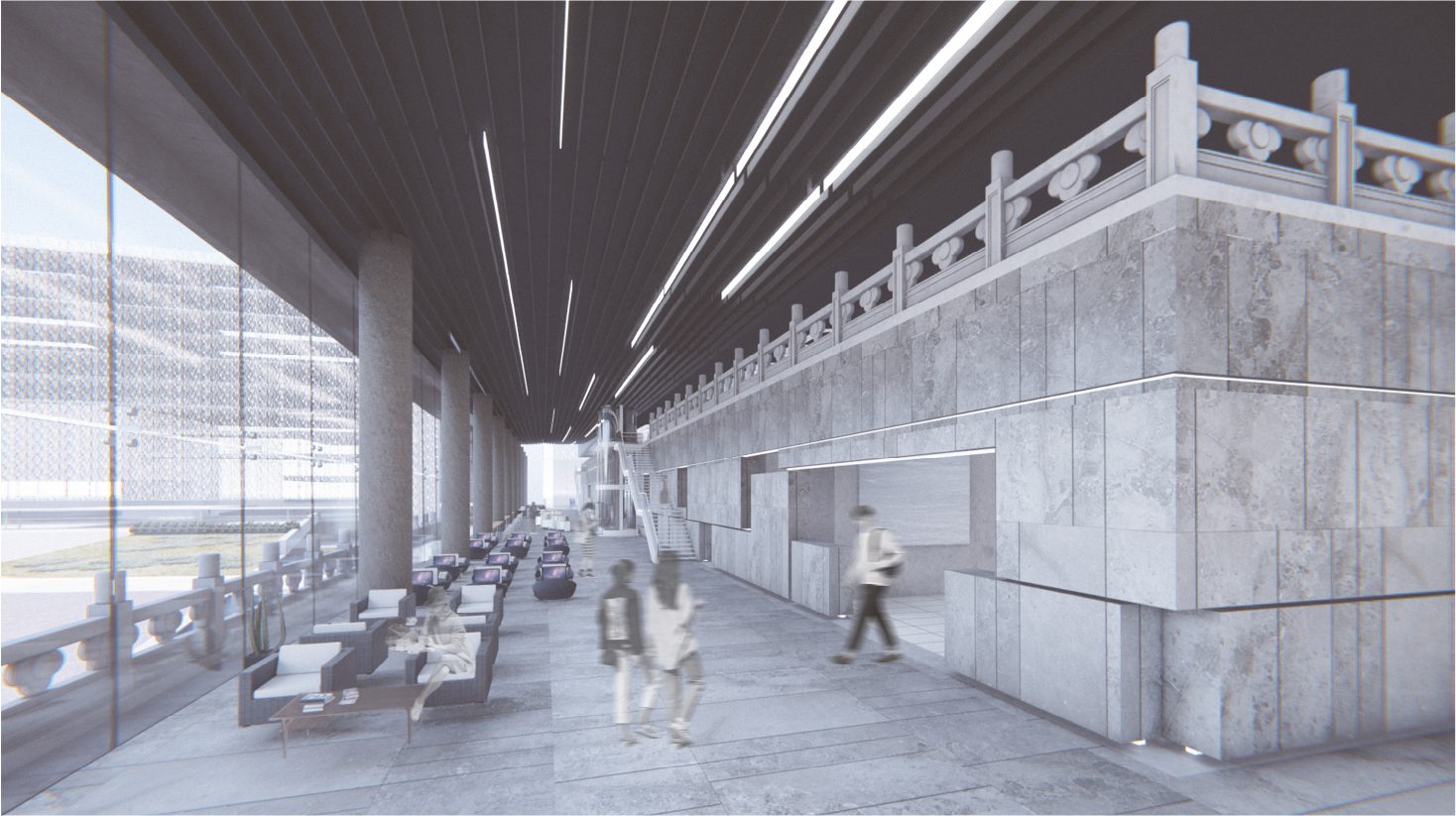
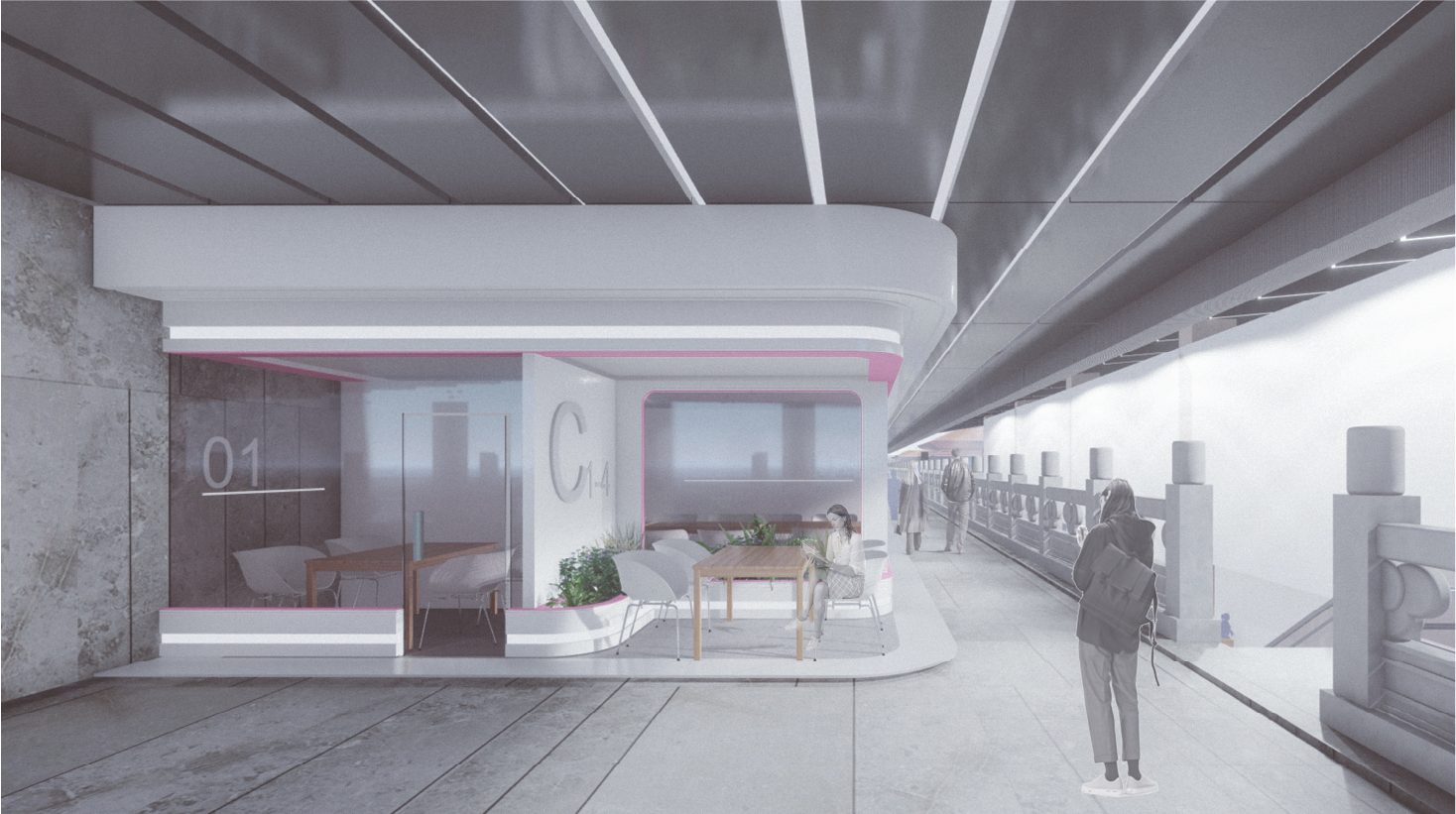
The CKS Memorial Hall features a massive three-tiered base to evoke an elevated sense of reverence. I’ve integrated this base into the indoor setting by introducing an architectural feature. On the north side, a grand staircase and a primary entrance were added, transforming it into a tiered reading space. The first level is designated as an open reading and study area, while the second is allocated for discussion rooms, “Using knowledge to dissolve the imagery of authority”.
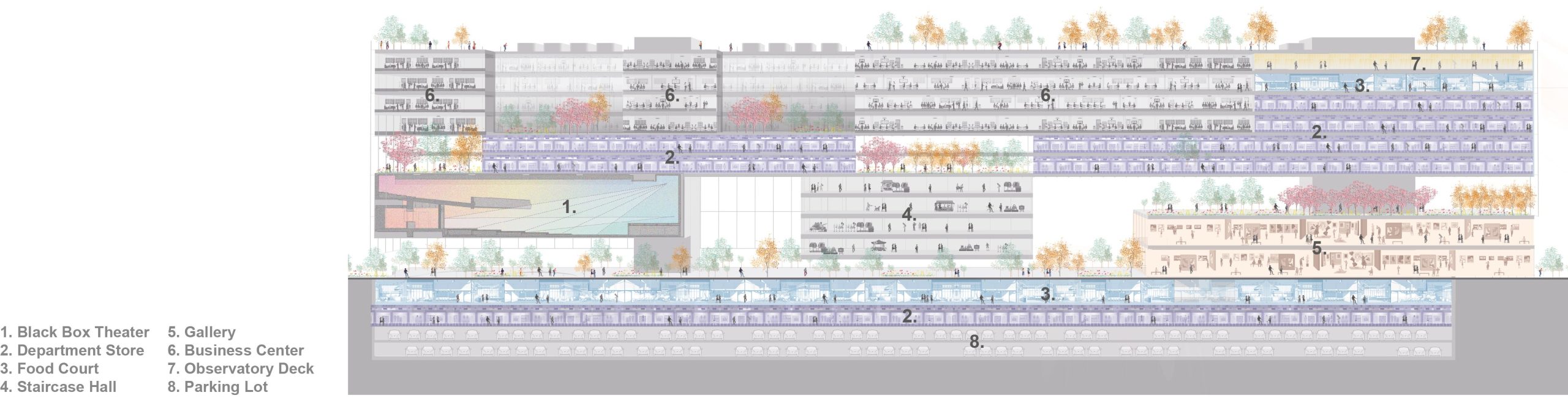
[The public character of a commercial complex]
I aim to rejuvenate this area through integrating a shopping mall, office spaces, a sunken plaza, galleries, a food boulevard, and a mid-sized theater. By creating voids at the base level of the commercial complex, a microclimate can be established, preventing ground-level congestion and offering the city a green corridor.
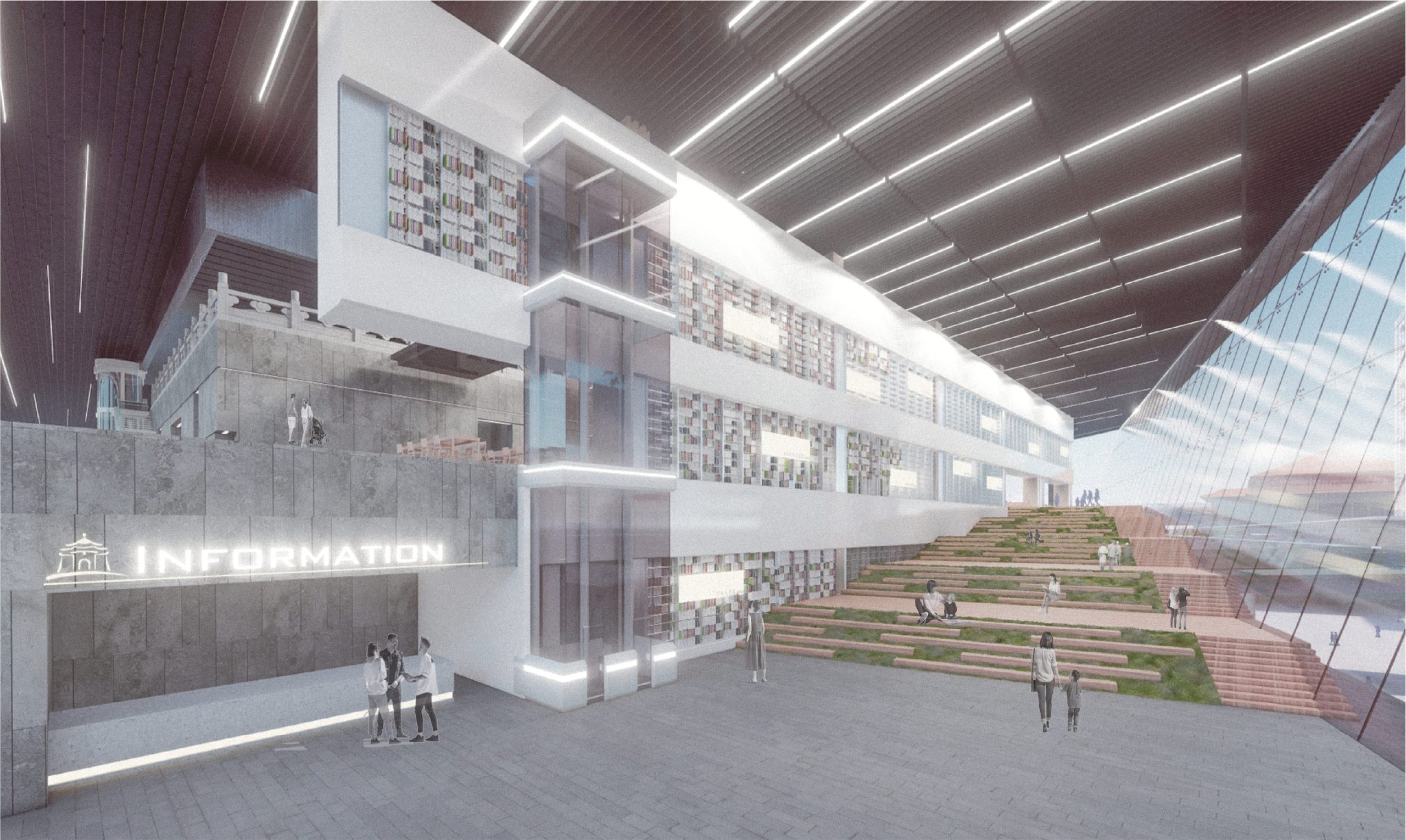
[Design Approach]
The entrance hall features a white book wall embedded with lightboxes depicting historical events. We have preserved the original walls and handrails. Alongside these historical representations and engrossed readers, we gradually ascend the pedestal, once a symbol of power. What was once a representation of authority is now an enclave for concentrated reading. Nestled within this “Hill of Intelligence”, I hope it prompts the public to contemplate the essence of democracy.